Mastering Digital Architecture with a Comprehensive Wireframe and Sitemap Creator
In the rapidly evolving landscape of web design, the gap between a conceptual idea and a functional digital product is often bridged by meticulous planning. For years, professionals in the industry have relied on fragmented tools to visualize structure and layout, often leading to inefficiencies and miscommunications between designers, developers, and clients. The introduction of a robust Wireframe and Sitemap Creator system changes this dynamic entirely. This tool is not merely a collection of templates; it is a refined methodology born from years of challenging professional work, designed to streamline the creation of precise, beautiful, and functional web architectures.
The core value of this system lies in its integration of two critical components: the browser platform grid system for detailed UI element placement and the innovative sitemap grid for high-level project charting. By combining these elements into a cohesive workflow, creators can produce deliverables that have a significant positive impact on stakeholder understanding and project execution. Whether you are a seasoned web designer, a hobbyist looking to professionalize your portfolio, or a business owner aiming to clarify your digital presence, understanding how to leverage such a comprehensive toolkit is essential for modern web development.
The Foundation of Precision: Browser Platform Grid Systems
At the heart of effective wireframing is the ability to work within standard dimensions while maintaining creative freedom. The included browser platform grid system offers a structured environment where precision meets flexibility. Featuring twelve and sixteen-column layouts, this grid system provides the necessary framework to align UI elements accurately. This adherence to standard column structures ensures that the resulting designs are not only aesthetically pleasing but also technically feasible for development.
One of the most significant advantages of this approach is the use of fully resizable vector formats. Unlike raster-based tools that can lose quality when scaled, vector elements allow designers to adapt their creations to any screen size or device requirement without compromising clarity. This scalability is crucial in an era where responsive design is not just a preference but a necessity. The drag-and-drop functionality further enhances efficiency, allowing users to populate their wireframes with tons of pre-designed UI elements. These elements are crafted to reflect real-world standards, ensuring that the wireframes serve as accurate blueprints rather than abstract sketches.
For educators and researchers, this level of detail provides an excellent teaching aid. Students can learn the importance of grid systems and alignment by manipulating these vector elements, gaining hands-on experience with industry-standard practices. Similarly, hobbyists can experiment with different layouts without the steep learning curve associated with complex coding environments, making professional-grade design accessible to a broader audience.
Visualizing Structure: The Innovative Sitemap Grid System
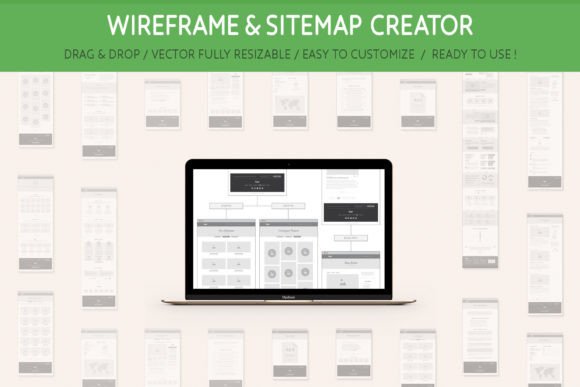
While wireframes focus on the layout of individual pages, sitemaps provide the macro view of the entire website architecture. The innovative sitemap grid system included in this creator allows for the exact placement of wireframes within a broader project chart. This feature is particularly valuable for creating beautiful project charts in no time, facilitating clear communication among team members and clients.
The sitemap grid supports ten and eighteen-page widthwise layouts, offering ample space to map out complex websites with numerous sections. By dragging and dropping wireframes into this grid, users can create a visual representation of the user journey, highlighting navigation paths and hierarchical relationships between pages. This visual clarity helps identify potential usability issues early in the design process, saving time and resources during development.
Moreover, the full sitemap presentation includes labels and chart elements that enhance readability and professionalism. These annotations provide context for each page, explaining its purpose and content requirements. For client presentations, this level of detail demonstrates thorough planning and expertise, building trust and confidence in the proposed solution. It transforms abstract ideas into tangible plans, making it easier for non-technical stakeholders to understand and approve the project direction.
Comprehensive Resources for Professional Deliverables
To support diverse project needs, the Wireframe and Sitemap Creator includes sixteen web page wireframes packed with tons of UI elements. These templates cover a wide range of common web page types, from homepages and landing pages to contact forms and blog layouts. Each template is designed to be easily adaptable, allowing users to customize them according to their specific creative needs. This versatility ensures that the tool remains relevant across various industries and project types.
The inclusion of Illustrator CS4 compatibility further extends the utility of this system. Professionals who prefer working within the Adobe ecosystem can seamlessly integrate these wireframes and sitemaps into their existing workflows. This interoperability ensures that the tool does not exist in isolation but rather complements other design software, enhancing overall productivity. For teams using multiple tools, this compatibility reduces friction and facilitates smoother collaboration.
Creating professional presentations with great positive impact has never been easier. The combination of precise wireframes and clear sitemaps enables designers to deliver compelling narratives about their projects. These deliverables are not just technical documents; they are persuasive tools that help secure buy-in from clients, guide developers during implementation, and showcase the designer’s skills in their portfolio. By presenting a well-structured and visually appealing plan, designers can differentiate themselves in a competitive market.
Practical Applications Across Different User Groups
The versatility of this system makes it suitable for a wide array of users. For business owners, it provides a way to visualize their online presence before investing in development, ensuring that the final product aligns with their strategic goals. They can use the sitemap to plan content strategy and the wireframes to approve layout decisions, reducing the risk of costly revisions later.
Developers benefit from the precision of the grid system and the clarity of the annotated sitemaps. Having a detailed blueprint allows them to estimate effort more accurately and code with greater confidence, knowing that the design has been thoroughly vetted. This reduces ambiguity and minimizes the back-and-forth typically associated with interpreting vague design briefs.
Educators and students can use the tool to teach and learn the fundamentals of web architecture. The drag-and-drop interface lowers the barrier to entry, allowing beginners to focus on structural logic rather than technical execution. As they progress, they can explore more advanced customization options, deepening their understanding of user experience principles.
Even researchers studying user behavior can utilize the sitemap grid to model different navigation structures and hypothesize about user flows. By creating multiple versions of a sitemap, they can test various organizational schemes and gather feedback on which structure best supports user goals.
Enhancing Collaboration and Workflow Efficiency
One of the most profound impacts of using a unified Wireframe and Sitemap Creator is the improvement in team collaboration. When everyone involved in a project shares a common visual language, misunderstandings decrease, and productivity increases. The standardized dimensions and clear labels ensure that designers, developers, and clients are all looking at the same thing, reducing the likelihood of interpretation errors.
The ease of adapting these templates to creative needs means that teams can iterate quickly. Feedback can be incorporated by simply dragging and dropping new elements or rearranging pages in the sitemap grid. This agility is crucial in agile development environments where rapid prototyping and frequent updates are the norm. The ability to produce high-quality deliverables in no time allows teams to respond to changing requirements without sacrificing quality.
Furthermore, the professional appearance of the outputs enhances the perceived value of the work. Clients are more likely to appreciate and approve designs that are presented clearly and professionally. This positive impact extends to internal team dynamics as well, fostering a sense of pride and accomplishment among team members who see their ideas translated into concrete, well-structured plans.
Conclusion: Elevating Web Design Standards
The Wireframe and Sitemap Creator represents a significant advancement in web design tools, offering a comprehensive solution for planning and visualizing digital projects. By combining precise grid systems, resizable vector elements, and intuitive drag-and-drop functionality, it empowers users to create professional-grade wireframes and sitemaps with ease. Whether you are a seasoned professional or a novice enthusiast, this system provides the resources needed to elevate your design practice and deliver impactful results.
As the digital landscape continues to grow in complexity, the need for clear, structured planning becomes increasingly important. Tools that facilitate this planning, such as the one described here, are indispensable for anyone involved in web design and development. By adopting such systems, creators can ensure that their projects are built on a solid foundation, leading to better user experiences, more efficient development processes, and ultimately, more successful digital products.